28 July 2026
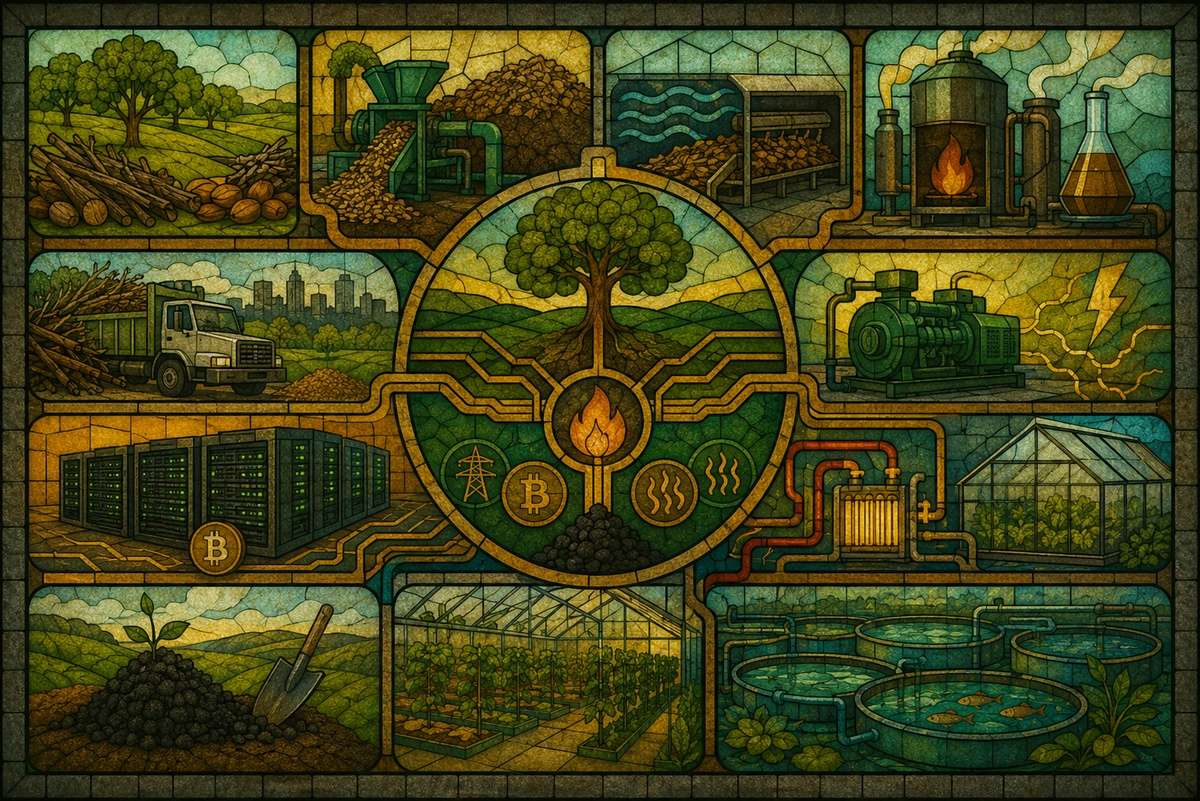
The Carbon Group is the engine that makes the Cathedral Project function as a connected system. It takes wood waste and converts it into electricity, heat, biochar, useful agricultural products, revenue, and—when power is available—Bitcoin.

The Carbon Group is not the sexiest part of the Cathedral Project. It is hot, noisy, dusty, complicated, and likely to leave somebody covered in black carbon by the end of the day. It is also the part that makes the rest of Cathedral fit together. I used to call it the project’s heartbeat, but that is not quite enough. The Carbon Group is Cathedral’s metabolic frame. It takes material in, breaks it apart, harvests the energy, and sends the resulting products back through the larger organism.
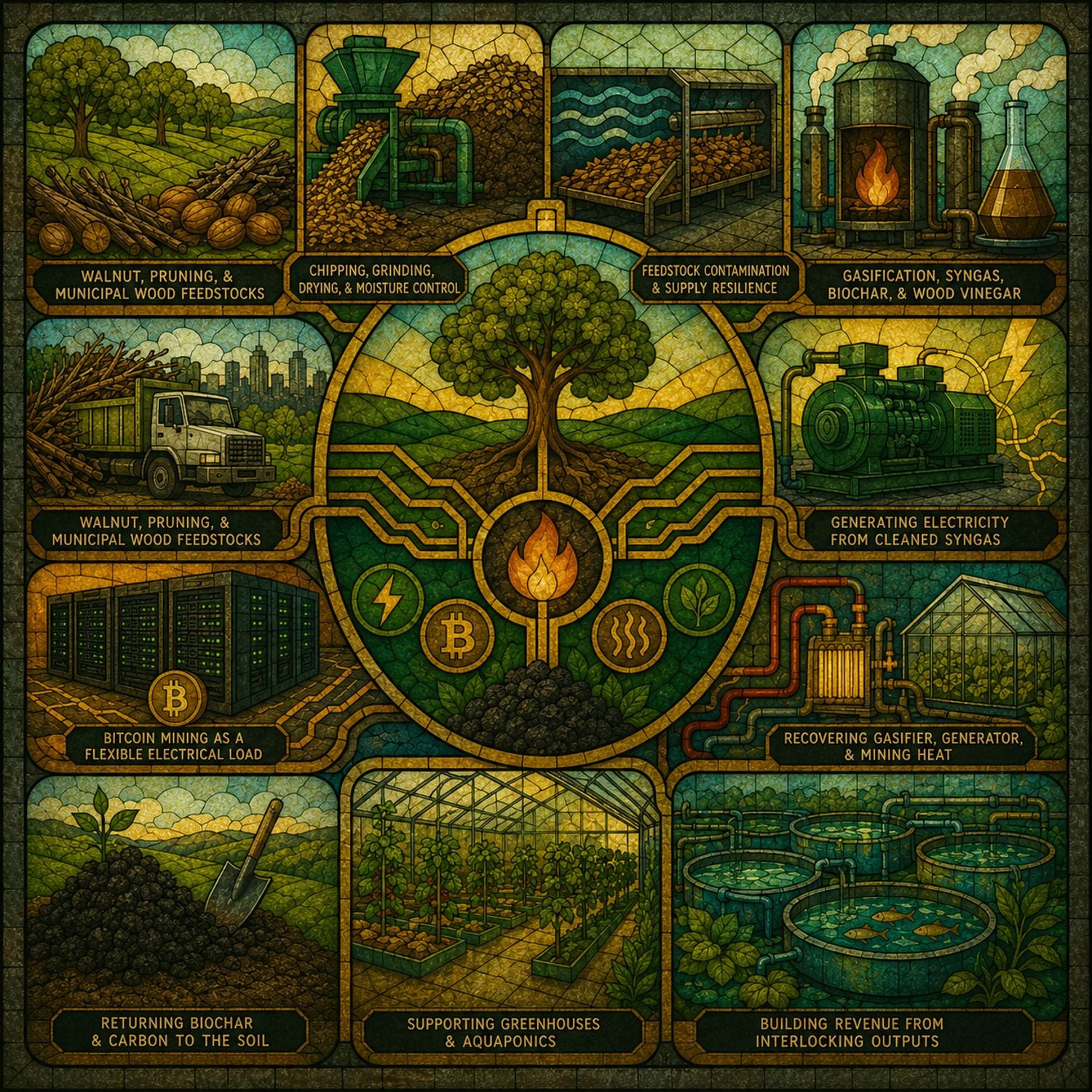
Cathedral is not supposed to operate like conventional agriculture, where one product is pulled from the land and everything else becomes somebody else’s disposal problem. Walnut shells, husks, pruning waste, municipal tree trimmings and chipped wood are normally treated as debris. Here, they become feedstock. In some cases, municipalities may even pay Cathedral a tipping fee to accept material that would otherwise be hauled to a landfill. People would effectively be paying us to receive something we need.
Once that biomass is chipped, dried and fed into a gasifier, the cascade begins. In a low-oxygen environment, heat breaks the wood apart through pyrolysis rather than simply burning it into ash. The process produces synthesis gas, heat, biochar and wood vinegar. The synthesis gas can be cleaned and used to run an engine connected to an electrical generator. Some of that electricity runs the chippers, conveyors, blowers, pumps and controls that keep the Carbon Group operating. The system begins using yesterday’s waste to prepare tomorrow’s fuel.
The heat is not an inconvenience to be dumped into the atmosphere. It is a product. High-temperature heat from the gasifier can begin drying freshly chipped wood. Generator heat can continue the process as the feedstock approaches its target moisture level. Lower-grade heat from Bitcoin miners can finish the job. After leaving the drying silos, the air may still be warm enough to support a greenhouse or aquaponics system. By the time that heat finally leaves Cathedral, the goal is to have worked it as hard as reasonably possible.
Bitcoin mining fits into this system, but it is not the purpose of the system. The miners are a flexible load that can consume electricity when the Carbon Group is producing more power than the rest of Cathedral needs. When a chipper, grinder or pump requires that electricity, the miners can be curtailed. When the equipment is idle, the miners turn otherwise stranded power into Bitcoin and place exposure to the hardest money ever conceived on Cathedral’s balance sheet. Bitcoin does not need to be awkwardly bolted onto the project. It simply catches energy that might otherwise go unused.
The biochar produced is even more important than the electricity. Cathedral needs enormous quantities of stable carbon returned to the soil. Properly produced biochar is highly porous, giving water, nutrients and soil biology a place to collect rather than wash away, evaporate or disappear. It functions like a water battery, a nutrient battery and a microbiology reef buried throughout the land. Instead of buying that carbon by the truckload, Cathedral can produce it from material other people were prepared to throw away. Once the land has received what it needs, excess biochar may become another saleable product.
None of this means the engineering is finished. Feedstock volumes remain unknown. Equipment must be sized. Incoming wood must be inspected for treated lumber, paint, plastic, heavy metals and other contaminants. The gas-cleaning system must protect the generator. Biochar quality must be tested. The economics of mining, tipping fees, carbon credits, electricity production and agricultural products still need actual numbers. A lot of math remains. But the larger principle is already clear: begin with what everybody else calls waste, then keep its energy and carbon moving through the system for as long and as productively as possible. That is why the Carbon Group is not merely another component of Cathedral. It is the mechanism that turns the whole project into a living system.
Cathedral Project Carbon Group
biomass gasification and Bitcoin mining
biochar regenerative agriculture
waste heat greenhouse system
Bitcoin mining with stranded energy

Member discussion: