31 May 2026
TL;DR
In August of 2024 I sat down with Toni Meachum, one of the attorneys for the King family, to unpack the ongoing fight between Washington state agencies and a multigenerational ranch in Central Washington. What starts as an alleged wetland issue turns into something much larger: lease cancellations, criminal exposure, sealed proceedings, cultural-resource allegations, and a brutal look at what happens when a family ranch becomes the target of a state with nearly unlimited money and patience

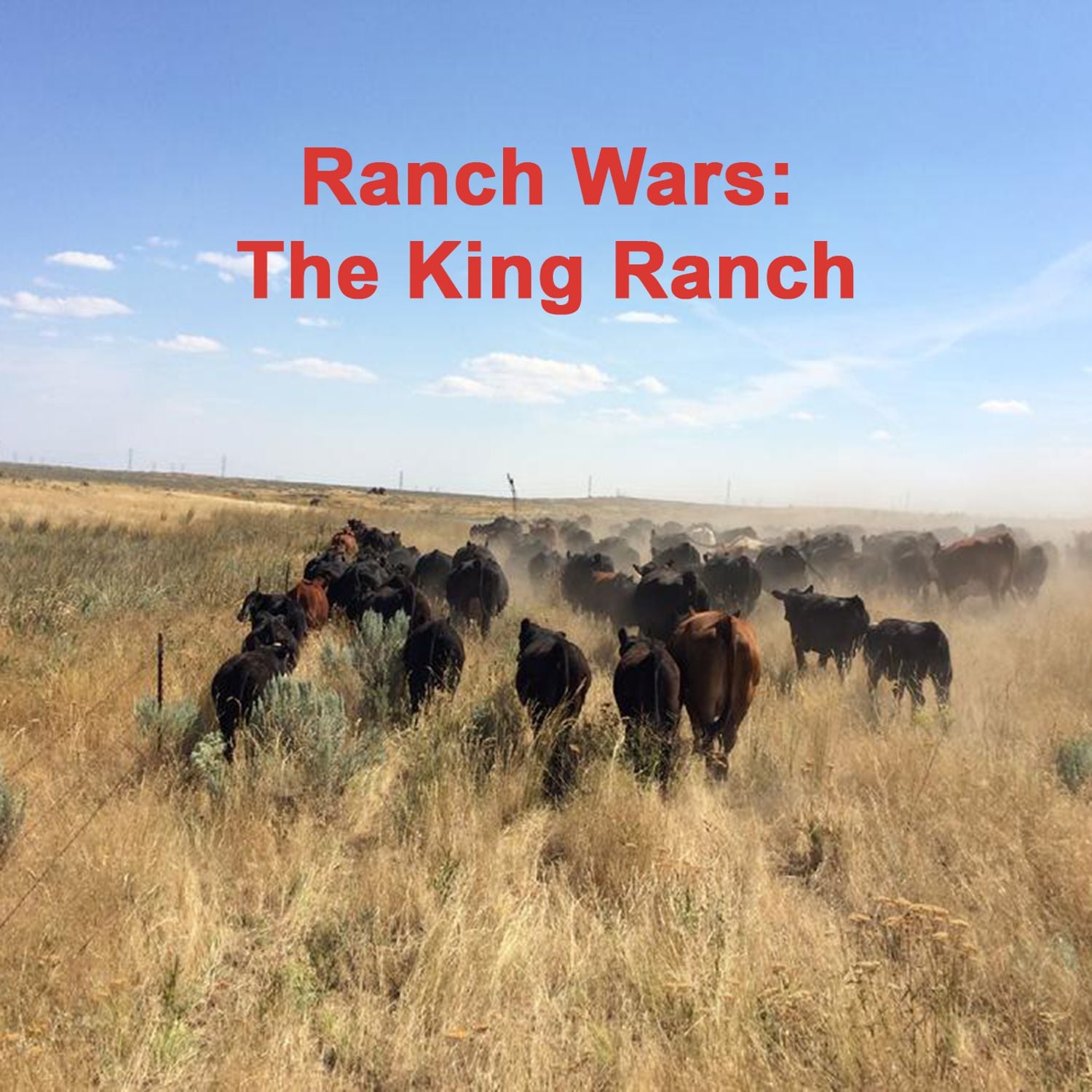
There is a difference between a farm and a ranch. A farm grows crops. A ranch is built around livestock, animal husbandry, land stewardship, and a relationship with place that is supposed to outlive the person currently holding the reins. When people talk about “ranching,” they often talk about it like it is just another business. It is not. As Toni Meachum put it, ranchers do not talk about an exit plan. They talk about a succession plan. That one sentence explains more about rural America than most policy papers ever will.
That is the frame for what is happening to the King Ranch in Central Washington. The Kings are a multigenerational ranch family running cattle in arid country where there is little farming, little irrigation, and not much margin for nonsense. Their operation depends on private ground, long-running state leases, cattle, stock water, and the kind of practical land knowledge that cannot be created in an Olympia office building with a spreadsheet and a mission statement.
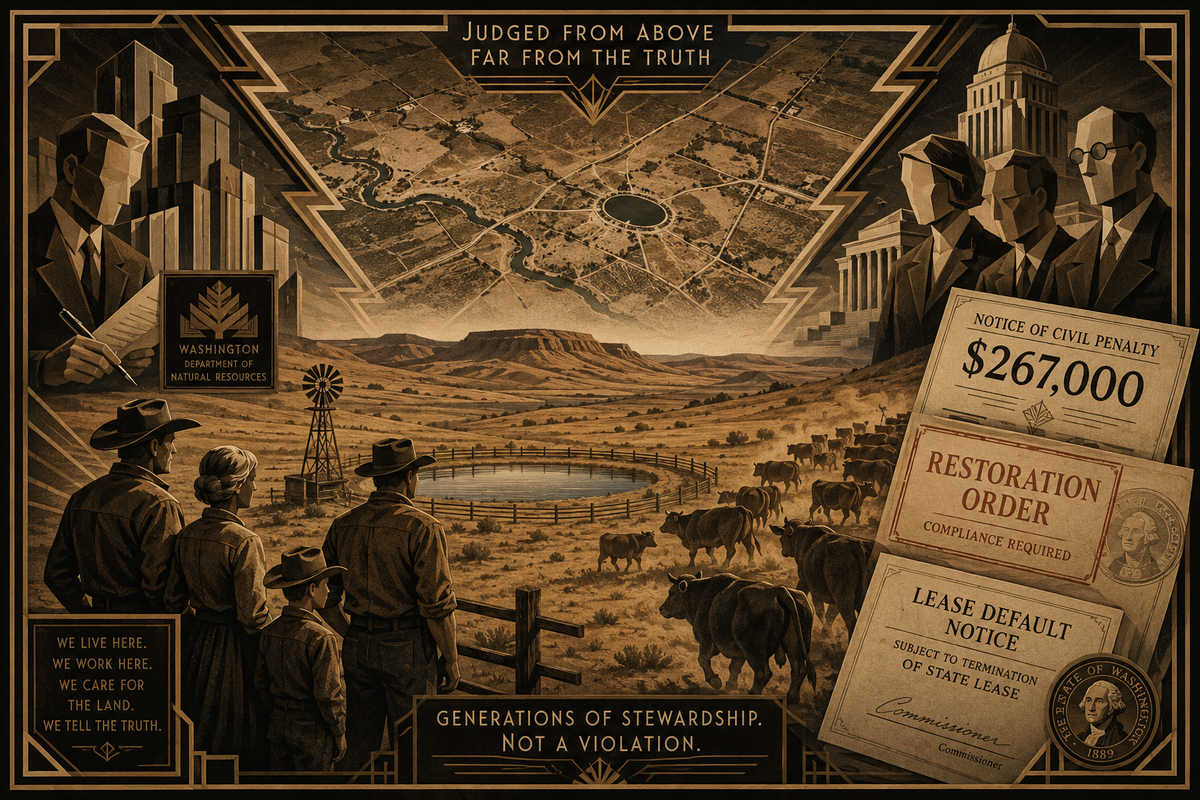
According to Toni, the trouble began with Washington’s Department of Ecology claiming the Kings had damaged “alkali wetlands.” That already sounds strange when you are talking about dry Central Washington cattle country, but it gets stranger. The claim, according to Toni, appears to have started from an aerial image pulled from Google Earth, not from agency people walking the ground and doing the hard work first. The Kings were then hit with a $267,000 fine and a restoration demand, while the Department of Natural Resources moved to declare them in default on their lease and kick their cattle off the ground.
And this is where the story stops being merely irritating and starts feeling deeply un-American. The Kings hired experts, and according to Toni, those experts found no characteristics of wetlands or alkali wetlands in the areas at issue. Yet instead of one clear dispute with one clear path, the Kings found themselves fighting on multiple fronts: an environmental appeal, a DNR lease fight, an APA action against Ecology, criminal exposure through the Environmental Protection Division, and another lease cancellation in Douglas County. Five separate actions. Five. For a family ranch trying to keep cattle watered and stay alive.
The criminal side is the part that should make everybody sit up straight. Toni described a sealed proceeding brought under an organized crime statute, with the state subpoenaing the King Ranch’s only employee and trying to compel testimony while the family could not even see what the state was basing its actions on. This does not sound like the America most of us were taught existed. You do not need to be a lawyer to understand the problem with “we have evidence, but you cannot see it,” especially when the state is threatening felony consequences.
Then came the pivot. The original story was wetlands. Later, DNR moved toward cultural-resource allegations, with claimed indicators on a tiny fraction of a 12,000-acre lease, while still seeking to keep the Kings off the whole thing. This is how bureaucratic warfare works. The accusation changes shape, the battlefield expands, and the target bleeds money the entire time. The state can always say, “If we are wrong, we will write a check.” But a ranch is not a checking account. You cannot write a check that replaces bloodlines, grazing ground, years of selection, a family’s working knowledge, or the trust between people and land.
That is the bigger point of this episode. This is not just about one family in Washington. It is about what happens when the people who actually steward land become easy targets because they are busy working, not networking, lobbying, or running media campaigns. Ranchers tend to keep their heads down, ask their families for help, and get back to work. That makes them strong in one sense and vulnerable in another. Because when the state decides to make an example out of somebody, the quiet people are often the easiest to isolate.
So no, this episode is not just “local ranch drama.” It is a warning shot. If a state can take a multigenerational ranch, claim wetlands from the sky, cancel leases, run sealed proceedings, float criminal charges, pivot to cultural resources, and force a family into years of legal defense before the basic facts are even clear, then this is bigger than the King Ranch. Spread this one around because if this machinery works once, it will not stop with one ranch.
- King Ranch Washington
- ranching and government overreach
- Washington Department of Ecology ranch case
- ranch stewardship and due process
- Bitcoin And ranch wars episode

Member discussion: