13 May 2026
TL;DR
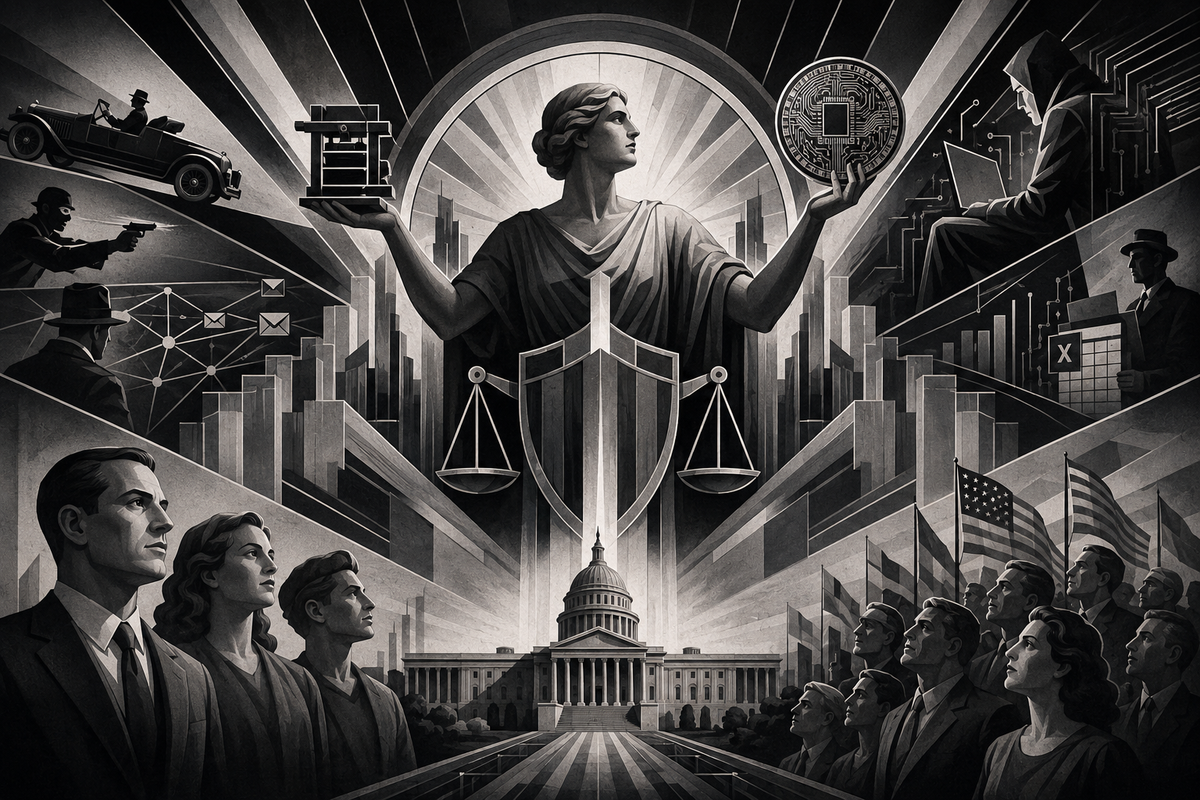
Today’s episode follows Bitcoin’s continued march into legacy finance, from Kevin Warsh’s Fed rise and Square’s one million Bitcoin-enabled merchants to Schwab’s retail crypto rollout. But the real fight is over who gets to build, who gets protected, and whether “tokenized Wall Street” becomes another shiny machine for separating people from their money.


Bitcoin is having one of those strange weeks where it feels like adoption is winning and common sense is losing at the exact same time. Kevin Warsh, who has spoken positively about Bitcoin and called it a useful signal for monetary policy, has been confirmed to the Federal Reserve Board while moving closer to the chairmanship. When the Fed sneezes, half the planet starts checking for symptoms. A Fed chair who does not treat Bitcoin like radioactive internet money is a real shift but Warsh is also known as an inflation hawk, and inflation is not exactly behaving itself with the PPI print of 1.7, almost 3 times the expected number.
Block’s Square has crossed roughly one million Bitcoin-enabled merchants after auto-enrolling eligible U.S. sellers into Bitcoin payments, with Lightning handling the rails and merchants receiving dollars by default. Most merchants do not want currency risk, tax headaches, or a lecture from a Bitcoin guy in line holding up everybody’s coffee. They want the sale to clear. If a customer pays over Lightning and the merchant gets dollars unless they choose otherwise, that is how Bitcoin sneaks into normal life.
Charles Schwab rolling out spot crypto trading to its first retail clients is another major infrastructure signal. Schwab is not a basement exchange with a mascot coin and a Discord server. It manages trillions in client assets, and now a first group of clients can trade Bitcoin and Ethereum alongside their regular brokerage holdings. That makes Bitcoin easier to buy for ordinary investors, especially people already living inside legacy finance. But there is a tradeoff. The more Bitcoin gets plugged into standard brokerage accounts, the more it starts reacting to standard Wall Street panic buttons: CPI, PPI, Fed chatter, rate expectations, and whatever some guy with a Bloomberg terminal decides at 5:31 in the morning.
And that brings us to the great tokenization carnival. Franklin Templeton and Kraken parent Payward are teaming up to bring more Wall Street products on-chain, including tokenized money market funds and other institutional products. Fine. Maybe some of that becomes useful plumbing. But let’s not pretend there is no fire nearby. Anthropic and OpenAI are both warning investors that unauthorized stock transfers, SPVs, tokenized interests, and other backdoor “exposure” products may be void, unrecognized, and economically worthless to buyers. In other words: congratulations, you may have bought a very expensive screenshot of a thing you do not own.
This is why the tokenized-everything pitch deserves a raised eyebrow and maybe a fire extinguisher. When a real company says, “If our board did not approve this, you have no rights,” that should cut through the noise. Kraken and Franklin Templeton are serious players, but the broader market will not be limited to serious players. It never is. The same people who sold magic beans in 2017 will absolutely sell “pre-IPO AI exposure” in a slick wrapper if enough retail buyers are willing to click the button. The words change. The trap does not.
The biggest fight in Washington, though, may not be stablecoin yield or ETF status. It may be Section 604 of the CLARITY Act, the Blockchain Regulatory Certainty Act. BRCA is supposed to clarify that noncustodial software developers and infrastructure providers are not money transmitters if they do not control customer funds. That should not be controversial. Writing code is not the same thing as transmitting money. But without strong developer protections, the message to builders is simple: build wallets, protocols, privacy tools, or noncustodial software in America, and maybe prosecutors will decide later that you belong in prison. Is that CLARITY or a relocation package to Switzerland, Singapore, or the UAE?
Finally, the CFTC is backing Kalshi in its fight with Ohio over prediction markets, arguing that federally regulated event contracts belong under CFTC jurisdiction, not state gambling regulators. I am not exactly rooting for the federal government here, and I am not exactly rooting for the states either. The Tenth Amendment matters. So does the fact that gambling commissions are not exactly a clean, holy institution descended from Mount Liberty. Mostly, this is one to watch because the outcome will tell us how much of this new financial world gets absorbed by federal market regulators and how much gets dragged into fifty different state-level knife fights. And somehow, in 2026, the CFTC is standing shoulder to shoulder with prediction markets and crypto platforms in a way I never would have expected a decade ago. Be careful what you wish for, because sometimes the referee climbs into the ring and starts swinging.
Kidwarp's Vanilla
https://www.takemysats.com/kidwarps-vanilla-shop
nostr: https://ditto.pub/npub1yfp4s82l246g8fzfmsrwcw9n3ap0x2pjehg9en5hfj8cyachv2kswh32lg
Use code bitcoin and… for 10% off!

- Square Bitcoin merchants
- Charles Schwab crypto trading
- Kevin Warsh Bitcoin Fed
- tokenized AI startup shares
- CLARITY Act BRCA developer protections

Member discussion: